UAE
 Argentina
 Austria
 Australia
 Belgium
 Bulgaria
 Brasil
 Canada
 Switzerland
 Chile
 Czech Republic
 Germany
 Denmark
 Spain
 Finland
 France
 United Kingdom
 Greece
 Hong Kong
 Hungary
 Indonesia
 Ireland
 Israel
 India
 Iceland
 Italy
 Japan
 South Korea
 Mexico
 Malaysia
 Netherlands
 Norway
 New Zealand
 Poland
 Portugal
 Romania
 Russia
 Saudi Arabia
 Sweden
 Singapore
 Slovakia
 Thailand
 Taiwan
 Ukraine RU
 United States
 South Africa

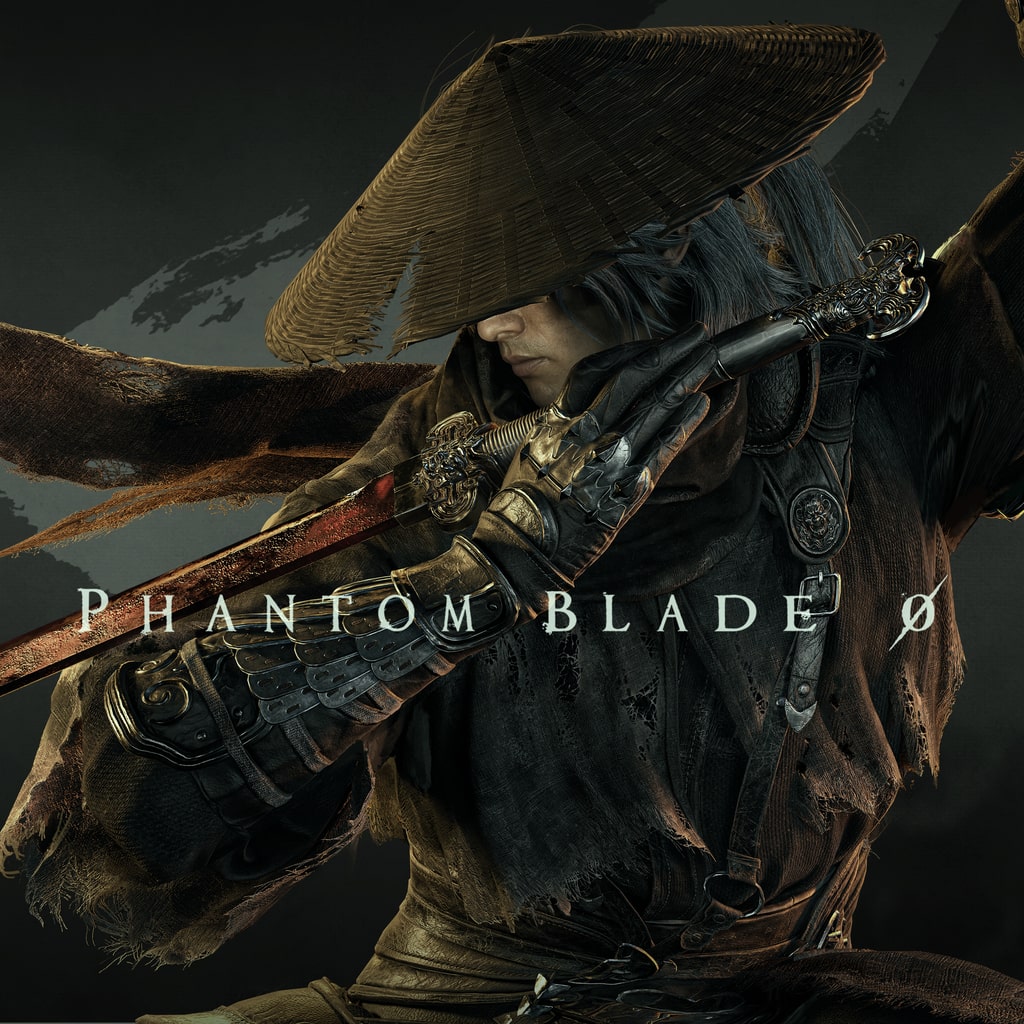
Caisheng Bo, the composer behind Phantom Blade Zero and a pioneer of Chinese experimental music, is set to release the game's soundtrack today via Milan Records. The four-disc, 81-track album promises an immersive audio journey, and Bo shared the intriguing backstory of its creation.
The musical journey of Phantom Blade Zero traces back 18 years to when Bo and Soulframe Liang—then a high schooler and a graduate student, respectively—were developing the indie game Rainblood 2: City of Flames, which would eventually evolve into the Phantom Blade franchise.
Bo, who is based in Beijing and graduated from the University of Virginia, spoke with IGN ahead of the soundtrack's launch.
IGN: The music in Phantom Blade Zero seems deeply connected to the game's folklore and cultural themes. How did you approach expressing that through music?
Bo: In traditional Chinese music, each instrument carries rigid associations—what it represents and how it should be used. I see this as a form of stereotyped expression. The erhu, for example, is often used to depict heroic action and personal sorrow. The pipa is linked to femininity and battlefield danger. Anything outside these conventions can feel out of place.
I wanted to challenge that narrative in Phantom Blade Zero. For each Chinese instrument, I created a polarity between its traditional associations and new meanings. The erhu still represents heroic action, but it also signifies 'manipulation'—a key image where red threads descend from the sky, pulling enemies upward and controlling them. The pipa is tied not only to danger and lurking crisis but also to 'discordance,' an otherworldly realm where time stops and space distorts. The matouqin and Hoomai (throat singing) represent 'mandate' and righteousness, while also evoking megalophobia—the fear of vast objects. The xūn, a Chinese clay ocarina traditionally used for weeping, is also heard when Mu Tianmiao, a character of absolute authority, appears. These narrative polarities are design choices I made to enrich the game's story through music.
Alongside this innovative use of Chinese instruments, there are stuttering sound designs in cutscenes, especially when Zuo Shang is plotting. As the story progresses, the stutter grows louder and more present, suggesting his growing ambition—his uncontainable 'Sha Qi' (killing intent).
By blending traditional Chinese instruments with modern genres and elements, I hope the music can cross cultural barriers, reach players' hearts, and offer a truly distinct listening experience.
IGN: What other works of art inspired you for this project?
Bo: The music of the Phantom Blade series dates back almost 18 years to the indie game Rainblood—that's where I began composing for this franchise. The music of Phantom Blade Zero is largely built on what I've written over the years, though it has evolved into something uniquely its own. Most melodies have been carried over, but the stuttering sound design and the polarity between traditional and new meanings are entirely new.
IGN: How did your score evolve as you saw the game come together during development?
Bo: Throughout development, Soulframe would send me in-game footage of an area once it was about 60% complete. They would play through the entire area—exploring hidden paths, defeating enemies, and finding treasures—just as a player would. As a result, I regularly received 4-hour-long video recordings for different areas. I would then divide these areas into segments and plan the music for each. Essentially, I work as both music director and composer, so I know where the music should start and what emotions it needs to capture. Once the team receives my music demo, they fine-tune the map, combat, and boss fights to match my music, ensuring the game and music sync perfectly.
IGN: What do you hope players take away from Phantom Blade Zero's soundtrack?
Bo: I would describe the ethnic Chinese music most listeners are familiar with as beautiful ancient villages or sacred temples—something straight out of an ink-wash painting, surrounded by tall mountains, beautiful waterfalls, and tall, sharp parasol trees. Because of Phantom Blade's unique concept of Kungfu Punk, I was able to make bold musical decisions to match the visuals. For Phantom Blade Zero, I want to introduce the modern side of Chinese music—think of Shanghai, a city of skyscrapers and flashy neon that is undeniably Chinese.
Beyond the music's origins, I believe music is a universal language we all speak. I wanted to show the endless possibilities of combining Eastern ethnic elements with Western modern genres such as pop, trap, and metal—and how we can all appreciate the aesthetically astonishing results, regardless of cultural differences.