UAE
UAE Argentina
 Austria
 Australia
 Belgium
 Bulgaria
 Brasil
 Canada
 Switzerland
 Chile
Chile Czech Republic
 Germany
 Denmark
 Spain
Spain Finland
 France
 United Kingdom
 Greece
 Hong Kong
 Hungary
 Indonesia
 Ireland
 Israel
 India
India Iceland
 Italy
Italy Japan
Japan South Korea
 Mexico
 Malaysia
 Netherlands
 Norway
 New Zealand
 Poland
 Portugal
 Romania
 Russia
 Saudi Arabia
 Sweden
 Singapore
 Slovakia
 Thailand
 Taiwan
 Ukraine RU
 United States
 South Africa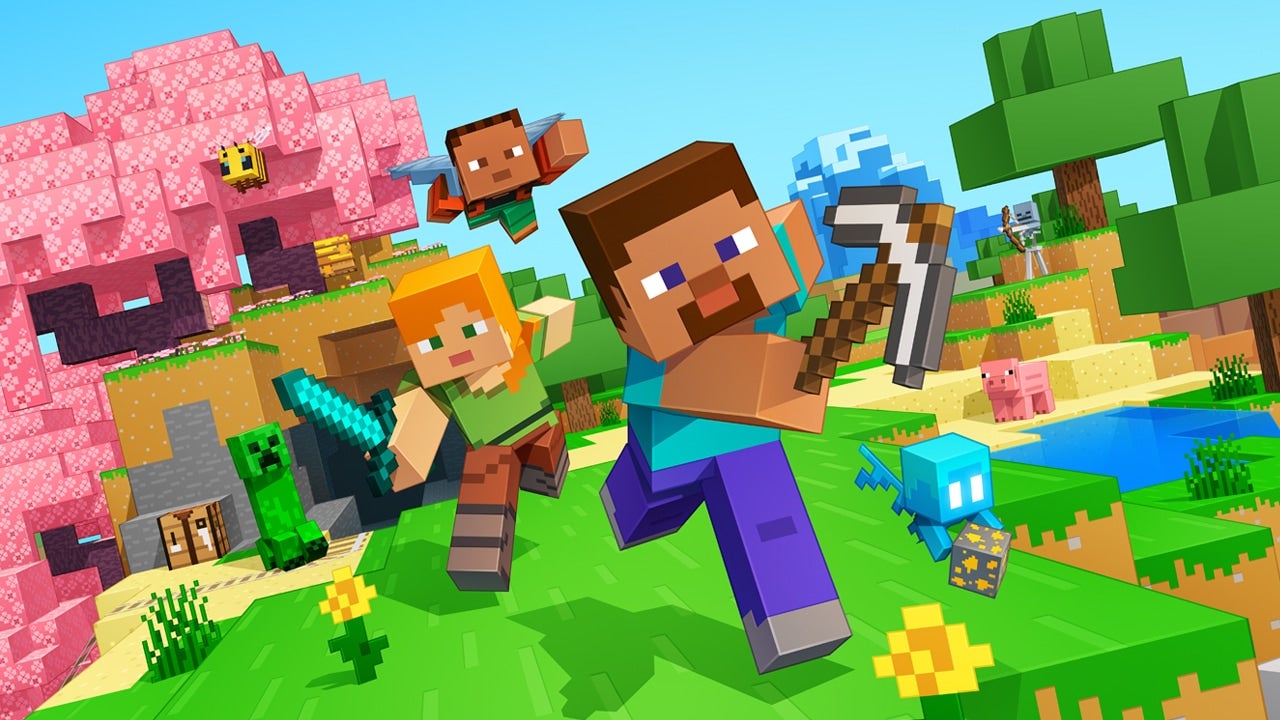
Minecraft is no stranger to simulations, but it turns out that under the right conditions, the game can beat itself... if given billions of years.
This was discovered by YouTuber RedLogic, who built a custom Minecraft simulation to see if the game could ever beat itself without a player ever joining. Two billion years is a bit too long to watch this play out in real time, of course, so he used a Monte Carlo simulation to "compress billions of ticks into explicitly sampled waiting times, while explicitly tracking rare events and the physical resources that can advance or destroy the chain."
But it wasn't just a case of time, either. RedLogic needed a Minecraft seed with the right amount of resources and a naturally-occurring ender portal, otherwise the game wouldn't be able to actually complete itself. So, of course, he ran another simulation to find the perfect world and then set the model loose.
While the game did eventually beat itself, it did so at a glacial pace, with tens of thousands or even millions of years between milestones. The endermen didn't even find the portal to the dragon until 35,510 years into the simulation. From there, it was a process of waiting for endermen to find the entrance to the portal, enter it and build towards destroying the dragon's End Crystals.
But because these are NPCs with random behavior, the process took millions of years and relied on blocks happening to be dropped in the right place. After three million years, a snow golem shot a projectile at an enderman, and destroyed one of the End Crystals. From there it was just a question of repeating that event nine times, and then getting creepers to explode and damage the dragon enough to kill it. All told, the simulation took 1.97 billion years to complete, but it did complete.
Obviously it's much faster to go in and kill it yourself, but the fact that this was even possible is part of the reason Minecraft has endured as long as it has. And seventeen years later, it's proving that anything is possible. Players can even sit down now.