
 UAE
UAE Argentina
 Austria
 Australia
 Belgium
 Bulgaria
 Brasil
 Canada
 Switzerland
 Chile
Chile Czech Republic
 Germany
 Denmark
 Spain
Spain Finland
 France
 United Kingdom
 Greece
 Hong Kong
 Hungary
 Indonesia
 Ireland
 Israel
 India
India Iceland
 Italy
Italy Japan
Japan South Korea
 Mexico
 Malaysia
 Netherlands
 Norway
 New Zealand
 Poland
 Portugal
 Romania
 Russia
 Saudi Arabia
 Sweden
 Singapore
 Slovakia
 Thailand
 Taiwan
 Ukraine RU
 United States
 South Africa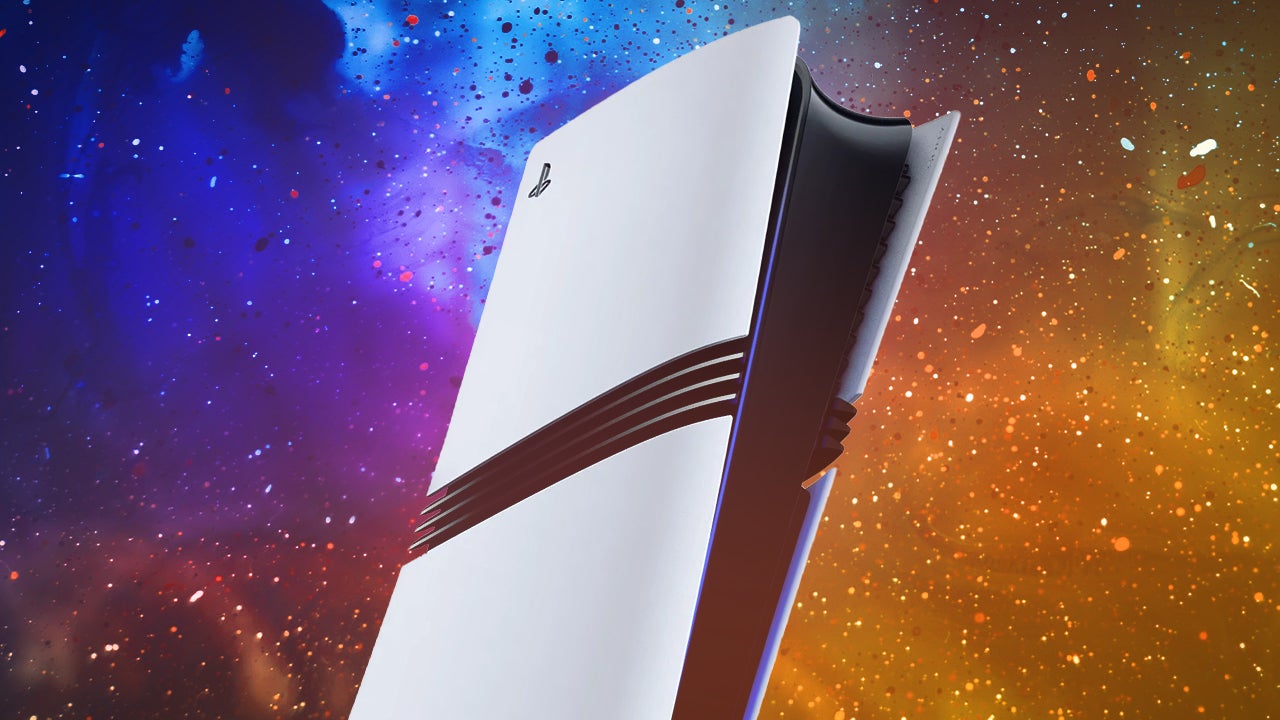
Sony and Nintendo should keep their current consoles alive for as long as possible, as rising costs have already led to price hikes for the PS5 and Switch 2.
That's the word from former PlayStation Worldwide Studios boss Shuhei Yoshida, who told The Verge that console makers need to focus on sustaining their current hardware platforms for "as long as possible."
While there's no indication that Nintendo plans to launch a Switch 3 anytime soon (the Switch 2 only came out last year!), the company always allocates a portion of its budget to researching future hardware. And upgrades to the launch Switch 2 model will undoubtedly be considered at some point, similar to the Switch Lite and Switch OLED.
As for Sony, we know a PlayStation 6 is coming eventually. Analysts previously suggested a 2028 launch seemed likely, though Sony has yet to make any official indication of when the PS6 might arrive — and as time goes on, that late 2028 release date feels less and less probable. Indeed, Yoshida has suggested that console makers may now be looking to delay the arrival of next-gen hardware as long as possible.
"Sony and Nintendo have sold enough of their current-generation hardware, so because of the cost of goods, they might be looking at pushing back the launch of next gen," Yoshida said. "I think they should try to keep the current generation as long as possible, because people are very happy using PS5 and Switch 2.
"People have a finite budget, and it feels like PC and consoles, the components very specific to these devices have increased their price way more than all the other forms of entertainment," he continued. "People who have systems like PS5, Switch 2, or PCs – you know, good enough PCs – probably will be happy to play games on them and not necessarily consider replacing them."
The key issue here is the skyrocketing cost of computer memory, aka "RAMageddon," fueled in part by the rise of AI datacenters. In short, memory production resources are limited, and much of next year's production output is already spoken for. Should Sony, for example, want to start manufacturing a new console anytime soon, it may be physically unable to do so in the volume it would like — let alone being able to sell the console for a price that consumers would pay.
As a reminder, Sony launched its PS5 with a disc drive for $500, while its digital-only counterpart sold for $400. These machines now cost $650 and $600 respectively — price rises of $150 and $200 since 2020. PS5 Pro launched at $700, meanwhile, and now costs $900. It's hard to see PS6 arriving at much less than $1,000. Switch 2, meanwhile, has risen in price by $50 since launch last year, from $450 to $500.
And then there's the general lack of desire from both consumers and developers for machines capable of drastically better performance, something Yoshida also noted. The only exception to this is Xbox, which has been more vocal about its push towards a next-gen offering with Project Helix. The difference with Microsoft's team, though, is it has not sold truckloads of consoles of late.
"I don't think lots of people are asking for more power — 'We need more power!' — or even developers," Yoshida concluded. "I don't think developers are asking for better hardware! So I think that means that the current generation, Sony and Nintendo are going to do pretty well for many years to come, still.
"Xbox is a team who wants to change the competing landscape, so it's going to be hard for them, but it's their time to play. It's very exciting, what's going to happen next year?"