
 UAE
UAE Argentina
 Austria
 Australia
 Belgium
 Bulgaria
 Brasil
 Canada
 Switzerland
 Chile
Chile Czech Republic
 Germany
 Denmark
 Spain
Spain Finland
 France
 United Kingdom
 Greece
 Hong Kong
 Hungary
 Indonesia
 Ireland
 Israel
 India
India Iceland
 Italy
Italy Japan
Japan South Korea
 Mexico
 Malaysia
 Netherlands
 Norway
 New Zealand
 Poland
 Portugal
 Romania
 Russia
 Saudi Arabia
 Sweden
 Singapore
 Slovakia
 Thailand
 Taiwan
 Ukraine RU
 United States
 South Africa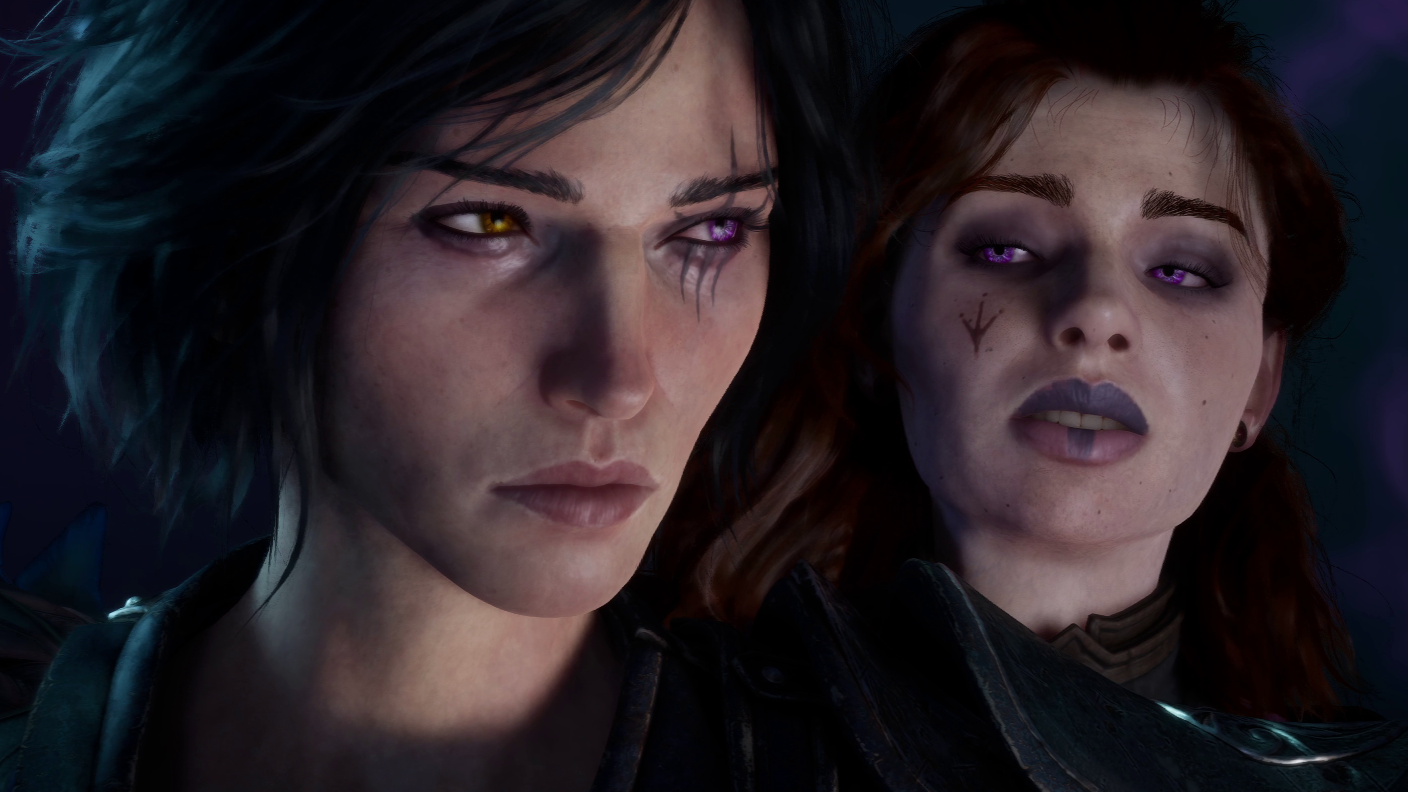
The developers of Warlock: Dungeons & Dragons have revealed that they intentionally omitted waypoints from the game to push players toward genuine exploration.
This open-world single-player action-adventure minimizes hand-holding by removing traditional quest markers that typically guide players from one story beat to the next. Although a compass appears at the top of the screen—which can be disabled—players must navigate by exploring, conversing with NPCs, and deducing their next move.
Dominic Guay, General Manager at Invoke Studios, explained to IGN at gamescom 2026 that the choice was made to foster exploration. "We wanted them to engage with the world, to figure things out and feel that when they found things, it was based on their actions and not just blindly trusting a waypoint," he said.
Guay and his team at Invoke have prior experience crafting open-world games with waypoints, such as Ubisoft's Watch Dogs series. However, for Warlock, they aimed for a different approach.
"The core team on this game have worked on other open world games before and we've done the, let's say, the heavy-handed guiding approach before," Guay said. "What ends up happening at some point — and it's normal — a lot of players will just follow blindly the waypoint, and then you lose that agency, you lose that feeling of curiosity because you're like, well, why even bother? And so we didn't want to go there. We wanted the player to explore."
To support this, Warlock features a Mystery system that activates when players perform certain actions, usually within a settlement. The goal is for players to uncover mysteries through exploration, NPC interactions, and information gathering, rather than following a quest marker to the official start.
"There are multiple entry points," Guay explained. "They're kind of harder for us to do in that way, but we love that challenge. Not only are there multiple entry points, but depending on how you stumble upon them, it might change how you interact with them, meaning that maybe you could have found actually you can chance upon that Mystery from a completely different place and then it'll lead you toward that settlement, and you'll know before coming in there's something fishy going on here. So then you'll approach that settlement differently than in this case where you learn it from within.
"Some [Mysteries] are a little bit more straightforward, some are a little bit more deep and requires more engagement and exploration, but that's really how they're built."
Hand-holding in video games is a hot topic right now, especially with the release of PlayStation 5 exclusive Marvel's Wolverine, which drew criticism for its infamous "fart gas"—the visual representation of Logan's scent trail as he tracks characters, hunts enemies, and locates collectibles. Some players want the option to disable it.
The two games are quite different, of course. Warlock is an open-world action-adventure with emergent gameplay stemming from its unique magic system, while Wolverine is a linear action-adventure with combat in confined spaces. Insomniac's game isn't a quest-marker type, but Invoke's philosophy on player hand-holding and how they avoided it is certainly intriguing.