
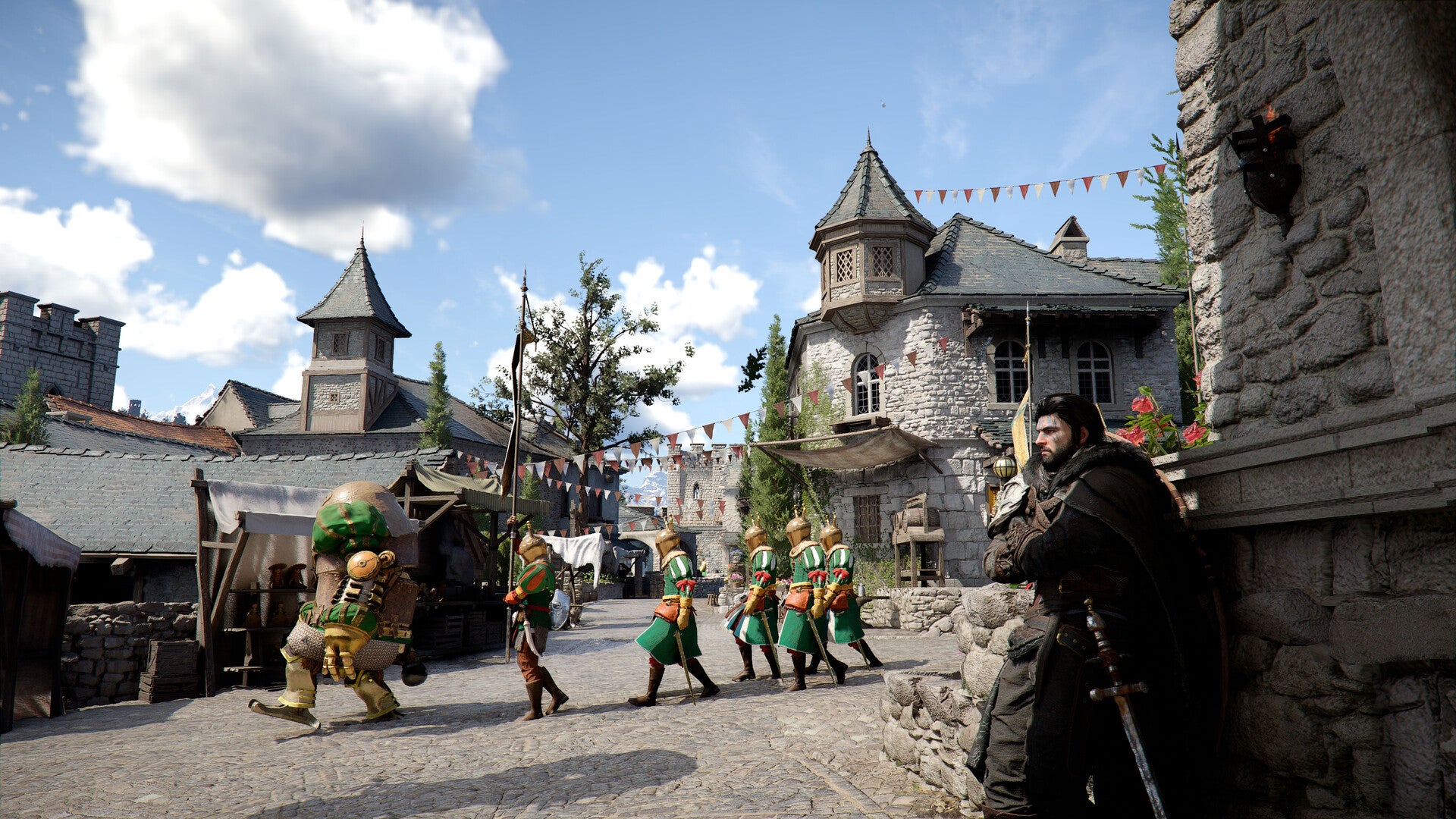
Is Crimson Desert truly an RPG? Does the label even matter in today's gaming landscape? These questions have ignited passionate discussions among fans as Pearl Abyss's highly anticipated "open-world action-adventure" title approaches its launch date, revealing a spectrum of opinions on genre definitions.
Let's begin with the developer's official stance. Pearl Abyss deliberately avoids calling Crimson Desert an RPG or a 'soulslike' game in their marketing materials. Instead, they consistently describe it as an "open-world action-adventure" experience. This straightforward classification has nonetheless sparked curiosity about why players are questioning its RPG status.
The conversation gained momentum when X/Twitter user Synth Potato analyzed Crimson Desert's progression system, arguing it shouldn't be considered an RPG. Their reasoning focused on the absence of traditional leveling mechanics and experience points—hallmarks of many role-playing games. Instead, players acquire new abilities by discovering artifacts scattered throughout the world and can purchase or craft improved gear. According to this perspective, these mechanics place Crimson Desert firmly in the action-adventure category.
However, does this automatically exclude it from RPG classification? Some counter that controlling a character who progresses through an open world—even without conventional leveling—qualifies as role-playing. They argue that experience points aren't essential for a game to be considered an RPG. This raises broader questions: Would that make all open-world games RPGs? Is Grand Theft Auto an RPG? What about Red Dead Redemption 2? The Legend of Zelda series doesn't feature experience-based leveling either, yet many fans describe it as RPG-like.
Notably, Crimson Desert shares similarities with The Legend of Zelda in presenting a fixed protagonist (the memorably named Kliff) and a predetermined narrative. Players won't encounter branching storylines or multiple endings based on decisions, though exploration freedom exists within this structured framework.
Fan reactions highlight the genre's blurred boundaries. "Everyone knows it's not marketed as an RPG," one player observed, "but it incorporates numerous RPG systems like gear scores, skill points for progression trees, and stat-building options." Another added, "It definitely contains RPG elements. The line between action-adventure and RPG has become increasingly fuzzy as more games blend these aspects." A different perspective emerged from a fan who commented, "It reminds me more of Just Cause or Shadow of Mordor, which is exactly what I was hoping for."
This ambiguity might explain Pearl Abyss's cautious approach to labeling. As one observer noted, "The term 'RPG' carries specific player expectations that Crimson Desert doesn't necessarily meet. To me, it feels like an open-world action-adventure with an exceptionally engaging combat sandbox."
Perhaps the most authoritative perspective comes from Pearl Abyss itself. Will Powers, Director of Marketing at Pearl Abyss America, recently clarified that players shouldn't anticipate traditional RPG elements like decision-making with consequential character impacts. Instead, the game's extensive world activities will facilitate role-playing through personal interpretation—what fans call "head canon."
Powers elaborated: "You define your character through progression within the game's systems. Then, through head canon, you'll have a distinct experience from other players due to the game's scope. You might get distracted by something, pursue a particular quest line, and have a radically different journey than someone else, even though you're both experiencing the same canonical storyline."
After online debates intensified, Powers personally explained why Pearl Abyss avoids the RPG label while accepting that fans might use it. "It's definitely an open-world questing and action sandbox," he tweeted. When someone suggested clarifying that Crimson Desert isn't an RPG to manage expectations, Powers responded: "Honestly... it's not my place to dictate someone else's experience. If players want to call it an RPG because of its substantial RPG elements, that's fine. I'm just explaining why WE don't use that term."
Crimson Desert launches on March 19 with a $69.99 price point. Pearl Abyss has confirmed the game will not include any cosmetic cash shops or microtransactions.
