
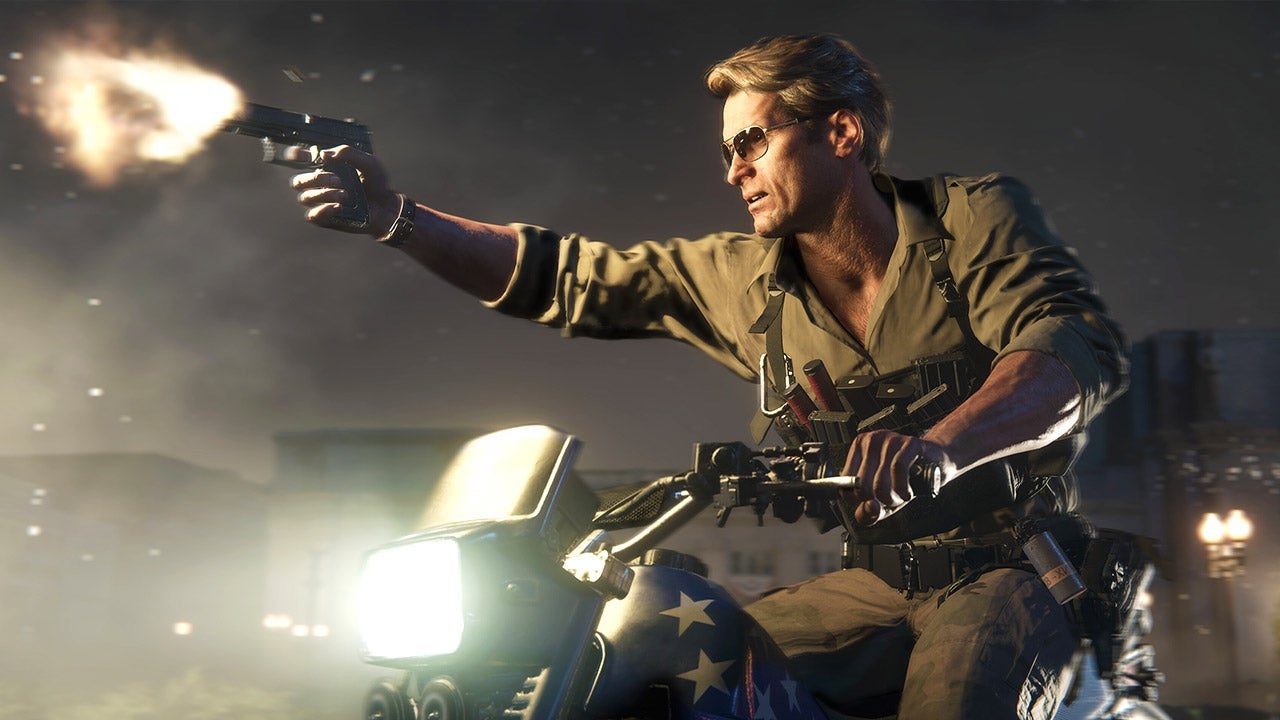
Brian Raffel, who co-founded Raven Software with his brother Steve in 1990 and served as co-studio head throughout its history, is retiring after 36 years at the studio. His career spanned major franchises including Star Wars, Star Trek, Marvel, and most recently Call of Duty. Steve Raffel retired in 2017.
In a statement announcing Brian Raffel's departure, Raven Software reflected on his journey: "In 1990, driven by a mutual passion for storytelling, Brian and his brother Steve embarked on creating their own venture. What started as a modest creative endeavor called Black Crypt evolved into something much larger. Over the decades, his leadership navigated our studio through a dynamic and ever-changing industry, molding it into its current form."
"From eerie, supernatural worlds to intergalactic adventures, Brian has woven narratives that have resonated with gamers globally. His portfolio includes titles such as Hexen, Star Wars Jedi Knight: Jedi Academy, X-Men Legends, Wolfenstein, and numerous others, each adding to a heritage of memorable gaming moments. These early accomplishments established Raven as a standout developer and earned the confidence to help shape and advance the Call of Duty series over time."
Based in Madison, Wisconsin—a city not initially recognized as a gaming hub in 1990—Raven Software transformed the local scene. Its presence spurred the growth of other studios, like a Respawn Entertainment satellite focused on Apex Legends and the now-closed Human Head Studios, developer of Prey (2006). The area now boasts a vibrant development community, supported by the University of Wisconsin-Madison, where Brian Raffel graduated and where Raven runs a mentorship program.
While Raven has dedicated the last decade-plus to Call of Duty, contributing to Warzone and campaigns for Black Ops: Cold War, Black Ops 6, and Black Ops 7, its earlier history is remarkably varied. The studio rose to prominence through a close collaboration with id Software, which also originated in Madison before moving to Texas prior to Wolfenstein 3D's release. Their partnership began with 1994's Heretic, a medieval-themed first-person shooter built on the Doom engine. This was followed by the more RPG-influenced Hexen, a Hexen sequel on the Quake 1 engine, and a formal Heretic sequel on the Quake 2 engine.
Legendary Doom designer John Romero shared his memories with IGN about Brian Raffel and Raven Software: "Brian was the one who picked up the phone in winter 1991, soon after id Software relocated to Madison. A local newspaper ad seeking programmers caught my attention, and the name Raven Software hinted at a game company, so I called. I asked Brian if they were in gaming, they were, and I introduced myself as part of id Software, a small PC game developer. Would it be okay if we dropped by to say hello?"
"The four of us—Tom Hall, John Carmack, Adrian Carmack, and I—drove over in our cars. It was nighttime, and we were still working, thinking it would be a fun diversion. We met Ben Gokey, Steve Raffel, and Brian Raffel. We briefly greeted Paul Radek, a friend of theirs who later licensed his 32-bit sound libraries to us for DOOM."
"We spent time together and saw Black Crypt, their latest game. We discussed computers and their enthusiasm for Amiga gaming, with them showing us Super Cars II (I was a big Super Sprint fan). Their artistic skill really stood out, and after dinner, back at our office, I suggested licensing our Commander Keen 4 engine to help them break into the PC market. We arranged a deal with us and Apogee for funding, but it didn't materialize. I told Brian I'd reach out again later to see if they reconsidered."
"After Wolfenstein 3D launched and we experimented with a Wolfenstein 3D++ engine, I asked Brian if they'd like to try our latest 3D engine with enhancements. This time, they were eager to make PC games, so we licensed that engine for Shadowcaster. I promised Brian I'd get back to them after our next project."
"Right after DOOM's release, I contacted Brian again to see if they'd be interested in creating a game using DOOM technology. YES, they were keen! I purchased several NeXTSTEP computers, shipped them to Raven, and flew up to set everything up and network them. I showed Ben our cross-development setup, taught Michael Raymond-Judy and Eric Biessman how to use DoomEd for level design, and got them started on my concept, Heretic."
"Development went smoothly; they were quick learners and mastered our tech, completing Heretic in a year. I uploaded the shareware version of Heretic from my home on December 23, 1994. We continued collaborating on Hexen and began Hecatomb before I left id Software, ending our close partnership."
"Brian excelled at guiding the company through those early, chaotic times, transitioning from an Amiga-only studio to a PC developer that produced outstanding games. Their acquisition by Activision proved successful for Brian and Steve, and I was pleased for them. It's uncommon for a team to endure from 1990 to today—36 years! I certainly credit Brian for making that possible."
In an era when licensed games often had a poor reputation, Raven developed a series of acclaimed titles based on major IPs, such as Star Wars (Star Wars: Jedi Knight 2 – Jedi Outcast and Star Wars Jedi Knight: Academy), Star Trek (the 2000 first-person shooter Star Trek Voyager: Elite Force), and Marvel (X-Men Legends and its sequel, Marvel Ultimate Alliance, and X-Men Legends: Wolverine).
Raven also reunited with id Software to develop Quake 4 and the 2009 Wolfenstein reboot. Not to be overlooked are the groundbreaking, limb-targeting mechanics of 2000's Soldier of Fortune and its sequel, first-person shooters based on the magazine of the same name, where players could aim and destroy individual enemy limbs.
I discussed these projects and Brian Raffel's career—he was a teacher and track coach before entering game development—on episode 54 of my in-depth interview series IGN Unfiltered. You can listen to or watch that interview.
Today, Raven Software has a team of over 300 developers. Co-studio head David Pellas, with nearly 12 years at the studio, continues as the sole studio head.
