UAE
UAE Argentina
 Austria
 Australia
 Belgium
 Bulgaria
 Brasil
 Canada
 Switzerland
 Chile
Chile Czech Republic
 Germany
 Denmark
 Spain
Spain Finland
 France
 United Kingdom
 Greece
 Hong Kong
 Hungary
 Indonesia
 Ireland
 Israel
 India
India Iceland
 Italy
Italy Japan
Japan South Korea
 Mexico
 Malaysia
 Netherlands
 Norway
 New Zealand
 Poland
 Portugal
 Romania
 Russia
 Saudi Arabia
 Sweden
 Singapore
 Slovakia
 Thailand
 Taiwan
 Ukraine RU
 United States
 South Africa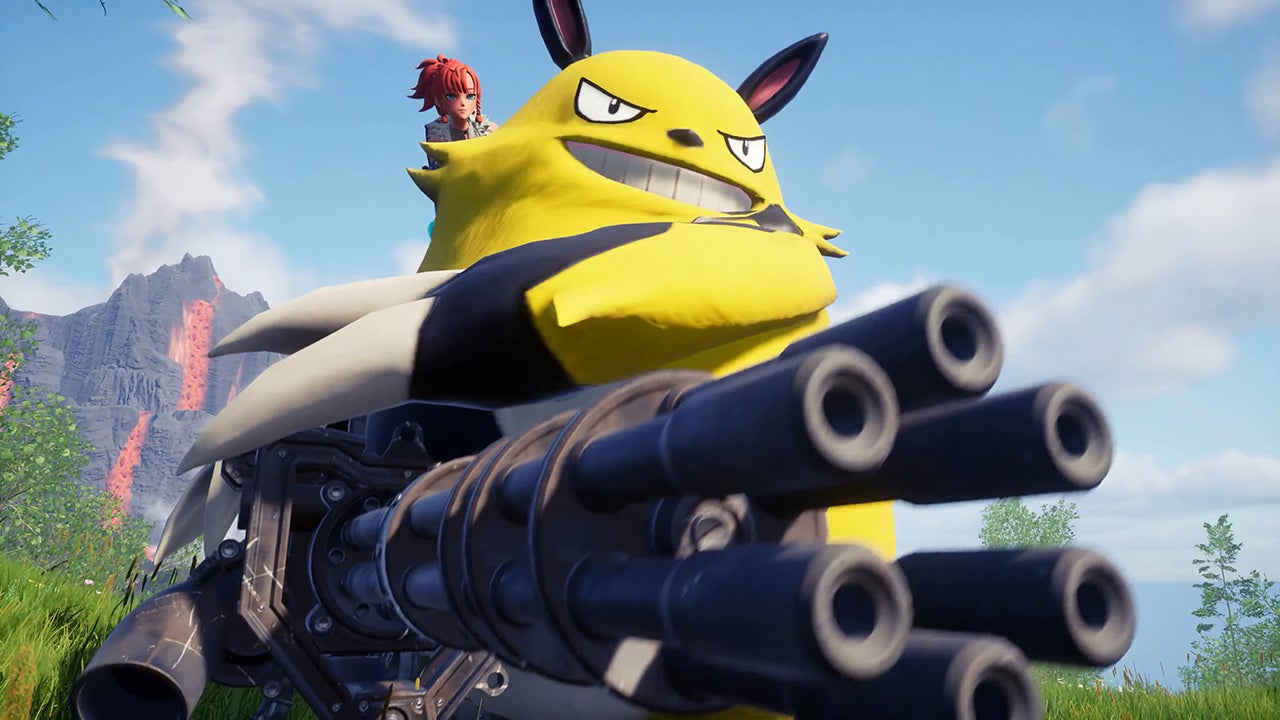
According to an intellectual property expert, Nintendo could be awarded as little as $30,000 if it prevails in its high-profile legal dispute with Palworld developer Pocketpair. However, the expert also suggests that Nintendo is increasingly likely to lose the case.
Nintendo and The Pokémon Company are currently engaged in ongoing litigation against Pocketpair in Japan, centered on patents related to how Pokémon games function. Palworld launched on Steam at $30 and debuted on Game Pass for Xbox and PC in early 2024, shattering sales and concurrent player records. Pocketpair CEO Takuro Mizobe admitted that the game's massive success generated profits the studio couldn't handle. Nevertheless, the company quickly capitalized on Palworld's breakout success by partnering with Sony to establish Palworld Entertainment, a joint venture aimed at expanding the IP. The game later launched on PS5.
Following Palworld's release, comparisons were drawn between its Pals and Pokémon, with some accusing Pocketpair of copying Pokémon designs. Instead of filing a copyright infringement lawsuit, Nintendo and The Pokémon Company pursued a patent-based legal strategy. Their initial lawsuit sought 5 million yen (approximately $30,000) each, plus late payment damages, and an injunction to block Palworld's release.
In November 2024, Pocketpair confirmed that the lawsuit involves three Japan-based patents related to catching Pokémon in a virtual field. Palworld featured a mechanic where players throw a ball-like object (called a Pal Sphere) at monsters in the field to capture them, similar to the mechanic in Pokémon Legends: Arceus (2022). In response to the legal threats, Pocketpair released patch v0.3.11, which removed the ability to summon Pals by throwing Pal Spheres, replacing it with a static summon next to the player. Several other mechanics were also altered. Pocketpair stated that if it hadn't made these changes, “the alternative would have led to an even greater deterioration of the gameplay experience for players.”
In May 2024, Pocketpair further modified the game so that gliding required a glider rather than Pals. The studio described these changes as “compromises” made out of fear that an injunction could block Palworld's development and sale. “We understand that this will be disappointing for many, just as it is for us, but we hope our fans understand that these changes are necessary in order to prevent further disruptions to the development of Palworld,” Pocketpair said.
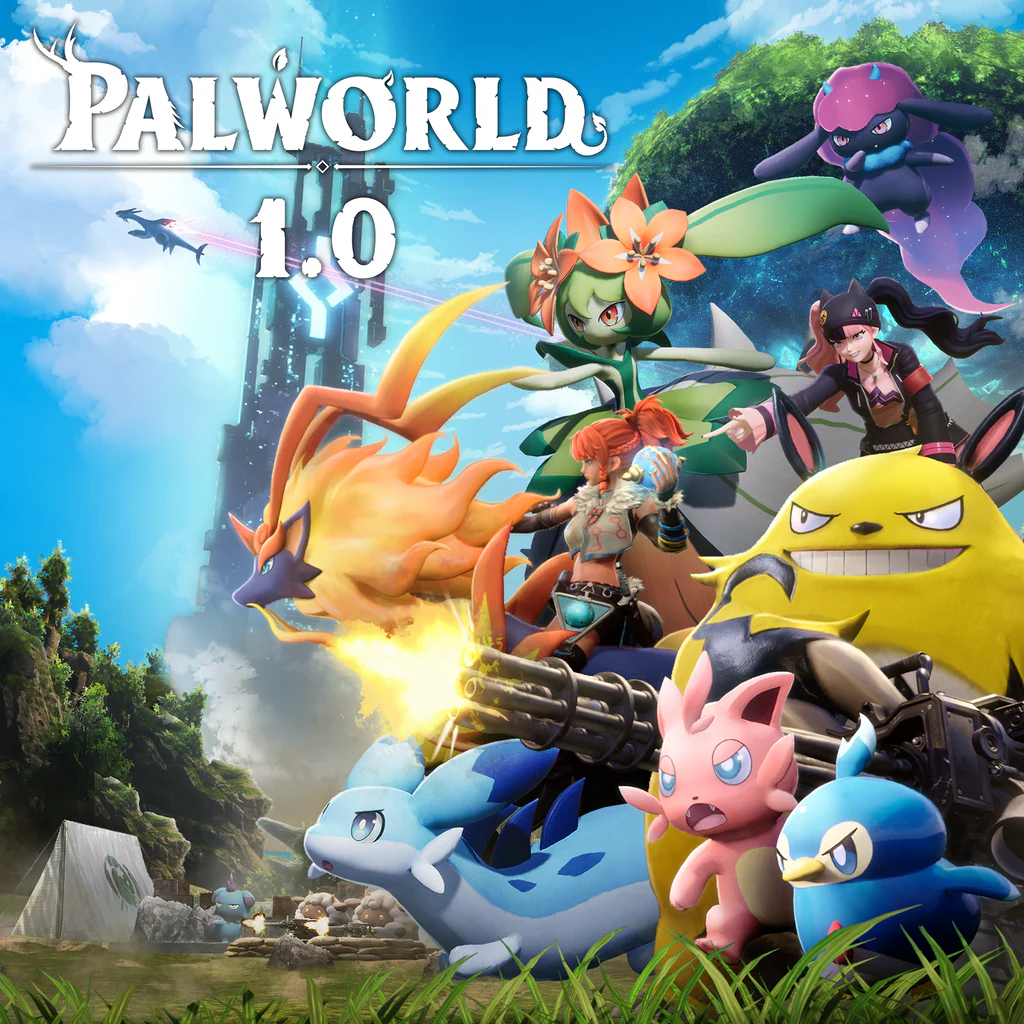
IP expert Florian Mueller, writing on games fray, noted that Nintendo and The Pokémon Company later amended their claims to focus on older versions of Palworld rather than all versions. This was likely due to Pocketpair's changes. Mueller concluded, “we cannot see any pathway to victory over any current or very recent Palworld version (nor Palworld 1.0, which should launch soon) for Nintendo. There will be no injunction with real-world impact.”
Even if Nintendo wins against older versions, the maximum payout would be 5 million yen (approx. $30,000). “That is chump change for either party, and just a rounding error compared to Nintendo’s litigation expenses,” Mueller said. This is because Nintendo can only seek damages for a short period with limited sales in Japan. Nintendo filed divisional patent applications after Palworld's January 2024 launch, and Pocketpair made changes that November. “Even if we assume, for the sake of the argument, that there was some infringement in 2024, it was a short period, the sales volume was limited, and Nintendo cannot recover damages on worldwide sales in Japan: a Japanese patent is valid only in Japan, like a U.S. patent is valid only in the United States,” Mueller explained.
“This litigation is no longer about anything serious in commercial terms. It’s about a hypothetical injunction that doesn’t apply to current product versions and (if anything) a small damages award for a period during which Pocketpair generated limited new sales in Japan.”
Could Nintendo pivot to a fresh lawsuit in another country? Mueller said that Nintendo may be deterred by the difficulty of obtaining game-rule patents in key jurisdictions. For instance, in April, the USPTO rejected Nintendo's controversial 'summon character and let it fight' Pokémon patent after heavy criticism from IP lawyers.
A resolution is expected later this year. The court has scheduled evidence presentation for October 1, 2026, and will issue an opinion on November 9, 2026. Meanwhile, Palworld 1.0 is set for release on July 10.