UAE
UAE Argentina
 Austria
 Australia
 Belgium
 Bulgaria
 Brasil
 Canada
 Switzerland
 Chile
Chile Czech Republic
 Germany
 Denmark
 Spain
Spain Finland
 France
 United Kingdom
 Greece
 Hong Kong
 Hungary
 Indonesia
 Ireland
 Israel
 India
India Iceland
 Italy
Italy Japan
Japan South Korea
 Mexico
 Malaysia
 Netherlands
 Norway
 New Zealand
 Poland
 Portugal
 Romania
 Russia
 Saudi Arabia
 Sweden
 Singapore
 Slovakia
 Thailand
 Taiwan
 Ukraine RU
 United States
 South Africa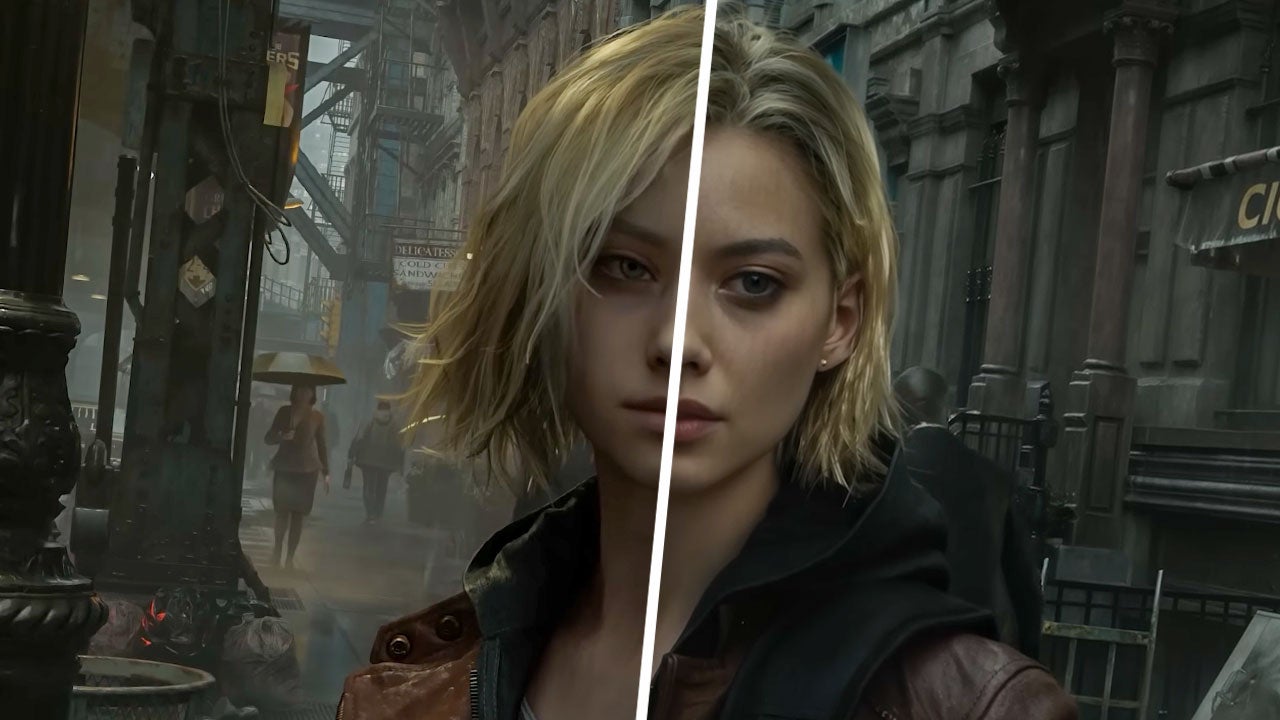
Nvidia unveiled DLSS 5 this week, integrating neural rendering into its AI-powered graphics card technology suite. The company asserted that game developers were supportive, despite the technology's potential to significantly alter game aesthetics—notably demonstrated with Resident Evil 5.
Assassin's Creed Shadows and Resident Evil Requiem were showcased to highlight DLSS 5's capabilities. However, art teams at Ubisoft and Capcom reportedly learned about the feature only when the trailer launched. A developer from Ubisoft informed Insider Gaming, "we found out at the same time as the public." Capcom's art team was especially alarmed by the Resident Evil trailer, given the company's previous anti-AI stance in the series.
Capcom wasn't alone in its reaction. Animator Mike York, known for work on games like Death Stranding 2, live-streamed a response to Digital Foundry's DLSS 5 preview. He paused multiple times to highlight radical changes made by the neural rendering tech.
For example, York noted that with DLSS 5 enabled, Grace Ashcroft's eyes appeared misaligned, alongside added details like lip wrinkles and a differently shaped ear. Beyond this, York argued that Nvidia's claims about merely adjusting lighting and materials were misleading:
"The geometry hasn't changed in the computer," York explained. "So you're playing the game and the geometry isn't being changed, he's right, but he has to be careful on how he phrases it. The geometry isn't being changed, but what's happening is that it's getting painted over, sort of. Every single frame is being painted over; it's actually not showing the real geometry anymore."
This suggests the DLSS 5 algorithm uses generative AI to create entirely new images based on original frames, explaining the odd aesthetic shifts and detail alterations in backgrounds.
Nvidia maintains that developers have control over the model's intensity. When queried for details, the company stated:
"The operation of DLSS 5 honors the artistic intent. In addition, by providing developers with detailed controls such as intensity and color grading, artists can adjust global contrast, saturation, and gamma, and determine where and how enhancements are applied to maintain the game’s unique aesthetic. Developers can also mask specific objects or areas to be excluded from enhancement."
From Nvidia's response, it seems developers and artists can protect certain assets from algorithmic changes. However, without seeing these controls in practice, their effectiveness remains uncertain.
DLSS 5 is still far from release, but many already view it as an unwelcome shift in video game artistry. The backlash was so intense that Nvidia CEO Jensen Huang addressed it at GTC 2026, asserting critics were "wrong" about their dislike for the technology.
Regardless, DLSS 5 is likely to undergo revisions before its expected rollout this fall, potentially curbing some of its more extreme effects. We'll have to wait a few months to see how it evolves.